Talk- Poetry, Remembrance: Echoes to Disappeared Voices
Talk

Saturday 19 September
15:00 - 16:00
Price: Free - Gratuit - Gratis
Language: English
Location: Piscine
with
Asmaa Azaizeh, Dima Mikhayel Matta & Haifa Saleh
Presentations
A talk about poetic resistance and memory, where the voices of two remarkable poets—Asmaa Azaizeh, a Palestinian poet based in London, and Dima Matta, a Lebanese poet based in Beirut—come together to echo the silenced and the erased.
Through their words, they defy the ruins of war, displacement, and historical amnesia. Asmaa’s poetry carries the weight of exile, while Dima’s work delves into the act of archiving as a form of preservation and defiance. Together, they explore how poetry becomes a living archive, a way to reclaim what has been lost or deliberately forgotten.
This encounter is an ode to the power of language to challenge silence, preserve memory, and give voice to the disappeared.
poetry & resistance

“Do we think of art during a tragedy?
I danced at home when bombs
were falling not too far
from where I live.
Was I a body moving in denial?
I did not write a single word at the time.”
- Dima Mikhayel Matta, Lately we've been lonely

« J’écris des poèmes sur l’humanité
et la laideur des guerres
sur la solitude existentielle
sur l’amour que traîne
un corbillard »
Asmaa Azaizeh, Ne me croyez pas si je vous parle de la guerre, French translation by Chakib Ararou
Our speakers
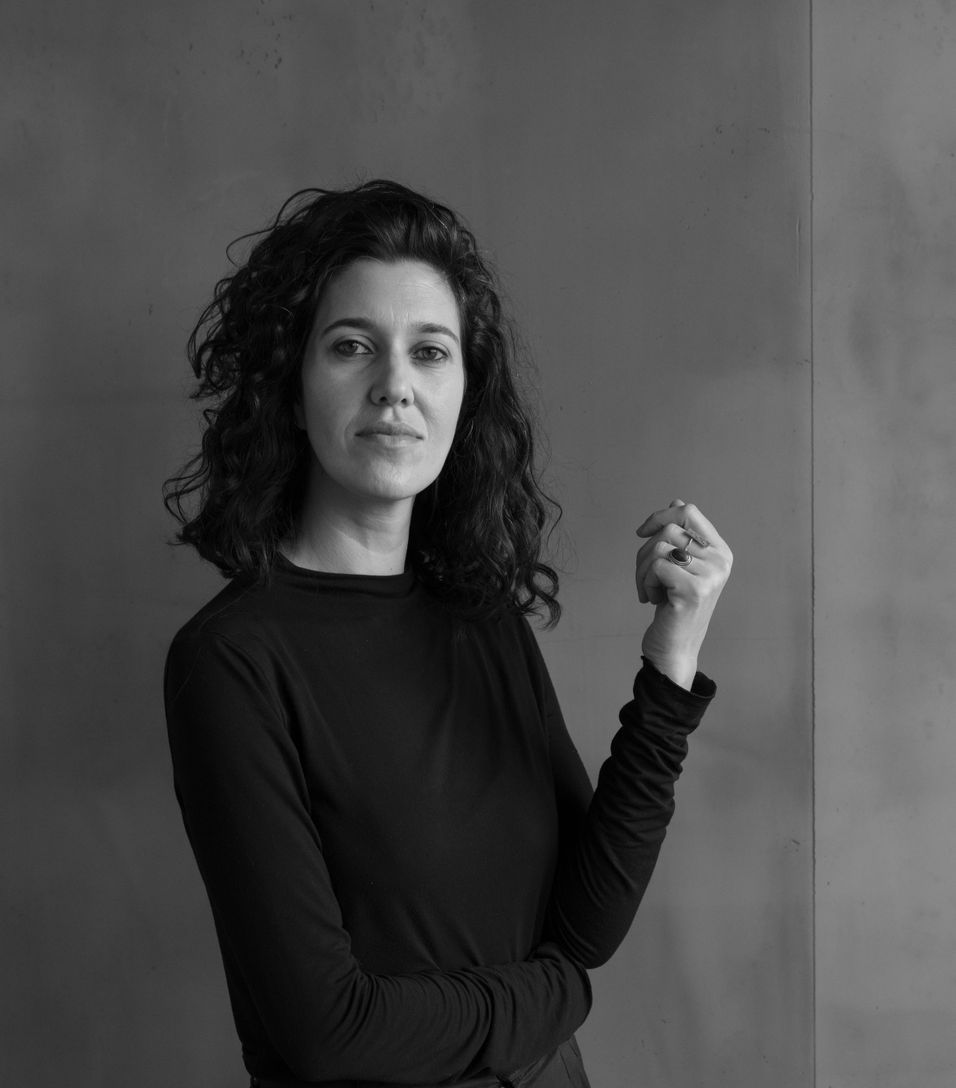
© Dirk SKIBA
Asmaa Azaizeh
Asmaa Azaizeh is a London based Palestinian poet, who was born in the Galilee, and has lived until recently in Haifa. She is an author of four poetry collections and a memoir. In 2010, she received the debutant writer award from Al Qattan foundation. Her poetry has been translated into many languages. Most recently her collection “Don’t Believe me if I talk of war” was published in Dutch, Swedish, and French. Her work moves between page and performance, and is known for its direct, clear-cut language and its refusal to look away from violence, while remaining attentive to fragile forms of hope. Asmaa’s audio visual performances have been staged at leading festivals around the world.

Dima Mikhayel Matta
Dima Mikhayel Matta is a Beirut-based writer, theatremaker, and teacher whose work moves between autobiography, performance, and collective storytelling.
Drawing on personal narrative, queerness, language and memory, their work interrogates belonging, grief, and the politics of voice in Beirut.

Haifa Saleh
PhD researcher in the area of urban design, urbanism, landscape and planning
Field of research: Anti-colonial indigenous practices for Social-ecological Spatial Justice.
"An architect, urban designer, experiential researcher, and builder. I have hands-on knowledge on Levantine tangible and intangible heritage, namely, natural construction methods and processes, agricultural practices, as well as folkloric performing arts. I obtained my Master's Degree in Human Settlements and the IMSDP Post-graduate certificate from KU Leuven.
My work spans multi-scalar spatial projects in the Levant, North Africa, and Europe utilizing collaborative analysis, design research, and building in tackling issues of social-spatial justice, climate change, food sovereignty, and commoning practices.
My doctoral research interrogates social and ecological spatial justice as a result of intricate interactions between colonial oppressions and indigenous subaltern struggles in the Jordan Valley. Aiming to bolster the critical capacity of indigenous practices as spearheads of more just spatial paradigms to reverse the calamities of hegemonic neo-colonial systems."